

Photo: Amazonian Activist and filmmaker Txai Suruí, a member of the Paiter-Suruí tribe of Brazil which has Melanesian ancestry, by Web Summit Rio, Wikimedia
Melanesian-descended people were a large portion of the Indigenous South American population until the era of European colonization. Brazilian scientists agree that the DNA data supports this conclusion.
Men and women of Melanesian ancestry made it to South America in ancient times. South American scientists agree that the DNA data from certain remote Amazonian tribes shows Melanesian people were here in large numbers.
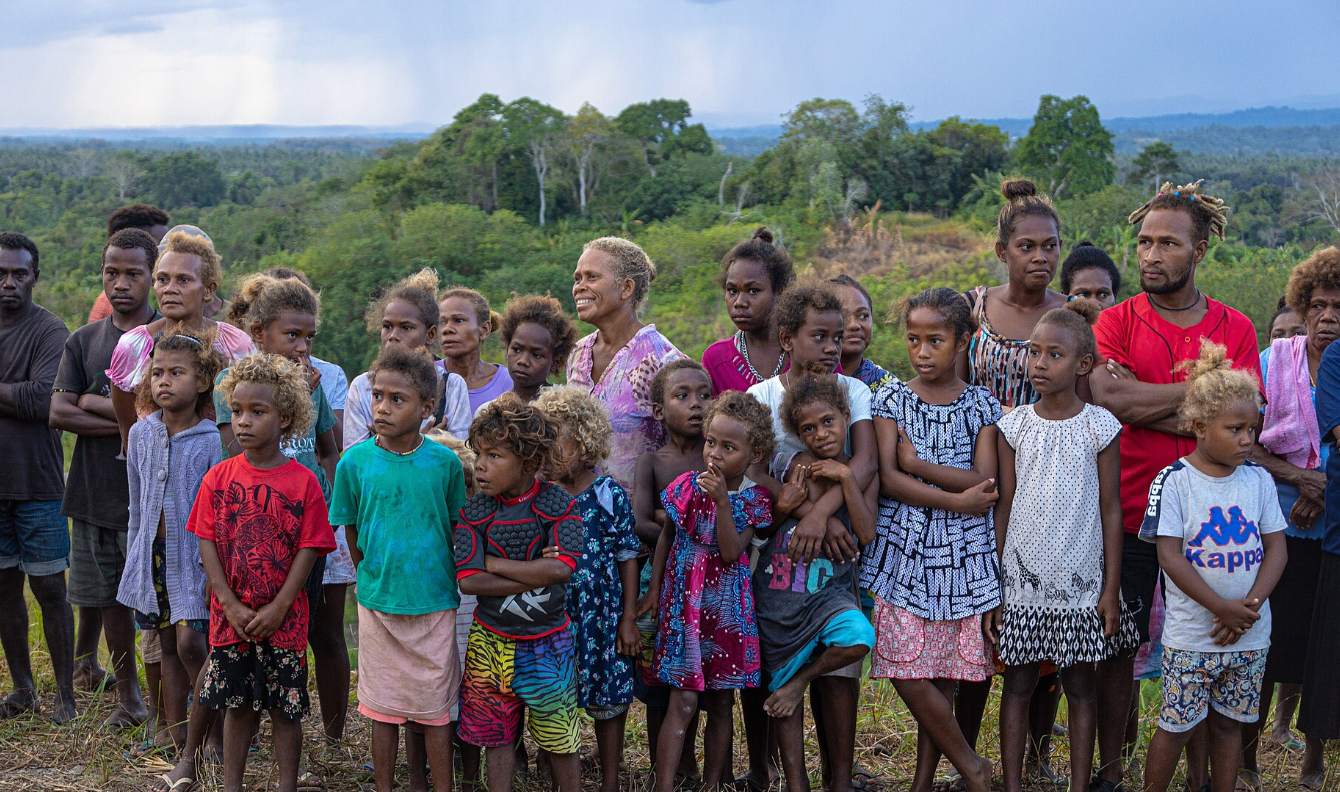
Melanesians, who are a branch of the larger Australasian family, once dominated the Pacific islands and much of continental southeast Asia. Traces of their DNA have been found in the Aleutian islands. Yes, Melanesian people once ranged that into the far north, and then travelled southward on the Pacific coastline.
In fact, the Melanesia Y-DNA signal was present in maritime Alaska because it lay on the Pacific coast transit route into North America.
The Brazilian team concluded that the Melanesia ancestors entered South America via the Pacific coast, bypassing the glacier-covered North American interior, leaving no trace there.
The Melanesian Y-chromosome signal, called Ypikuéra, had been detected among the Suruí (in the Amazon), but also the Chotwa people of Peru, Guaraní Kaiwá and Xavánte people of Brazil.
The research team (Silva, Ferraz, Bortolini and Hünemeir) concluded that the Australasian (Melanesian) is what most strongly connects Indigenous communities on the Pacific coast of Peru with the peoples of the Amazon and Brazil. This means Melanesians were the founding genetic family of South America, even as later arrivals diluted their contribution to the Indigenous gene pool.
Research team member Tábita Hünemeir said the Melanesian Y- signal was very widespread in South America until contact with the Europeans after 1492. The Y Melanesians “may not have survived” colonization, she explained. In warfare, the disproportionate deaths of males in the defeated population can erase entire Y-chromosome lineages very quickly, even though their other genetic traits, such as skin color, survive.
Evidence points to mass enslavement of coastal South Americans as a contributing factor to their decline. It should be noted that Melanesian-looking (“Black”) Natives were reported in the Caribbean and mainland North America by Spanish explorers in the 1500s, and other Indigenous Caribbean communities existed in Florida and as far north as New York in the pre-Columbian period. Native South Americans were travelling northward in pre-colonial times by choice, and later by force.


.jpg)
.jpg)