
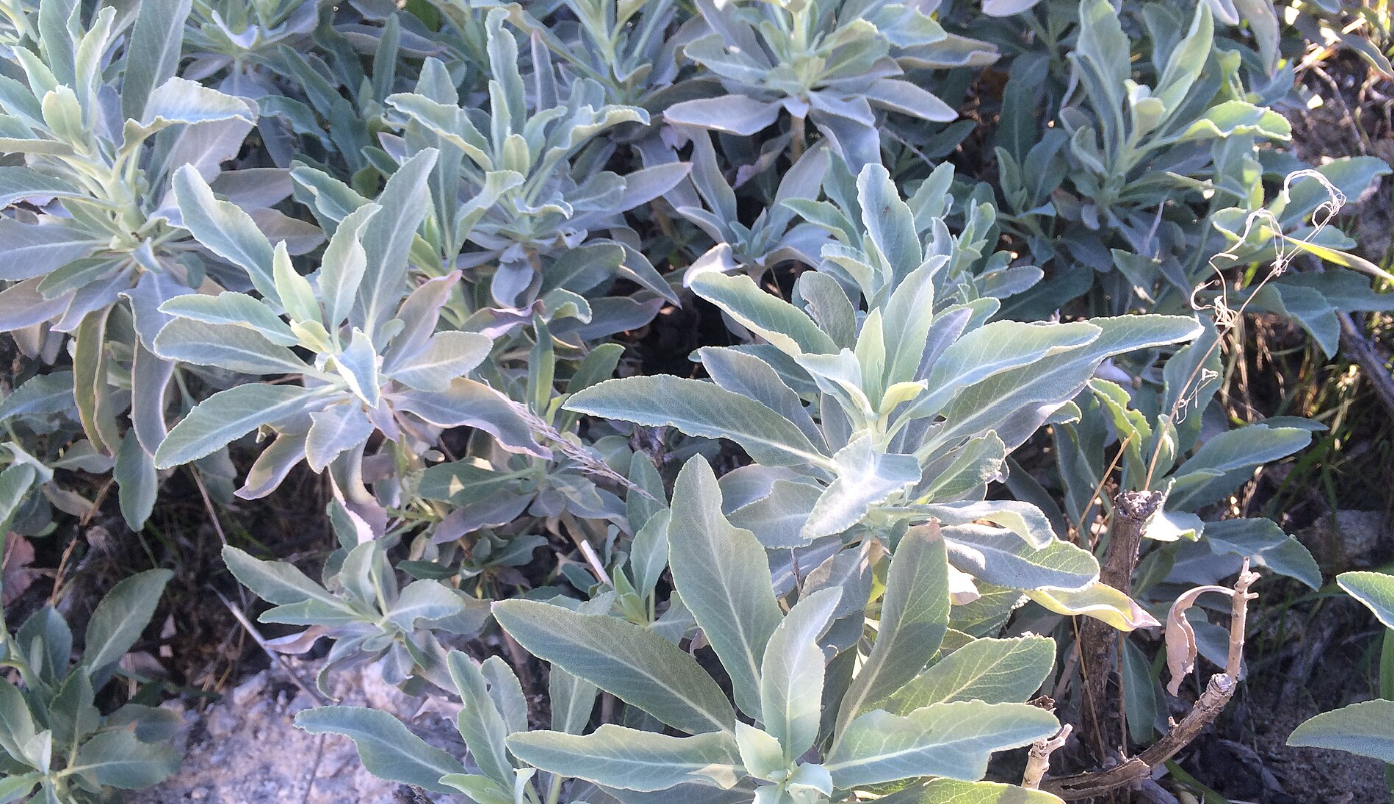
Photo: White Sage (Salvia apiana), California, taken by HLWolfe, Wikimedia
The history of Ui-Hapal dates back to the period when Mission San Diego de Alcalá was burned down. The Misquish lineages began with names like Jatñil, Ku-un, and Mis-weer—last names such as Quaha, Misquish, and Esh-un. There was a time when names were purely Tipai.
Everything changed when religion turned into slavery, genocide, rape, and violence. The Tipai people were pushed farther east. Many were born in what is now the United States but were not recognized as citizens. They were forced to remain in Tecate (Takaat), and as laws changed, so did their last names—becoming more Spanish and English in order to find work and even access basic necessities like groceries.
Peña Blanca became known to newly arrived European-American immigrants because of the gold the Tipai were pulling from the mountain. Some of those outsiders were good people; others were driven by greed. It is arguably one of the oldest Native American reservation areas on both sides of the border. Mexican president Benito Juárez is said to have visited.
Over time, life in the mountains became extremely difficult. Many families moved around just to survive, and to this day, the struggle continues. Still, the Tipai dialect remains strong, along with traditional knowledge—plant medicine, survival skills, and the vaquero (cowboy) way of life.
With the help of the Sycuan Band of the Kumeyaay Nation, one of the most kind-hearted Tipai tribes in San Diego, there has been cultural revitalization. They offer bird singing classes, free of judgment, and have welcomed many to learn. Because of this, traditions like Takook are being revived in Peña Blanca and Nejí.
We are like a puzzle—every tribe, clan, and reservation holds a piece. We must come together to rebuild what was broken by colonization.
Back in those days, Peña Blanca, Nejí, and San José Tecate were like one—three in one. Everyone was closely related: brothers, cousins, family. Now, generations later, we are reuniting.
Just one or two generations ago, our people still held fiestas—Jamul, Campo, Manzanita, Sycuan, Nejí, Peña Blanca. That tradition began to fade after Uncle Tony Pinto passed—rest his soul. The elders still speak of him. They say he would pack up his old truck, travel from reservation to reservation by himself, helping people and connecting with the Tipai everywhere he went.
Today, Josefina Misquish, now one of the oldest authority figures, speaks about how things were back in the day, with the paisanos—as she calls them.
Eyaay-ahan mai-ha.
Omar


,_California.jpg)