
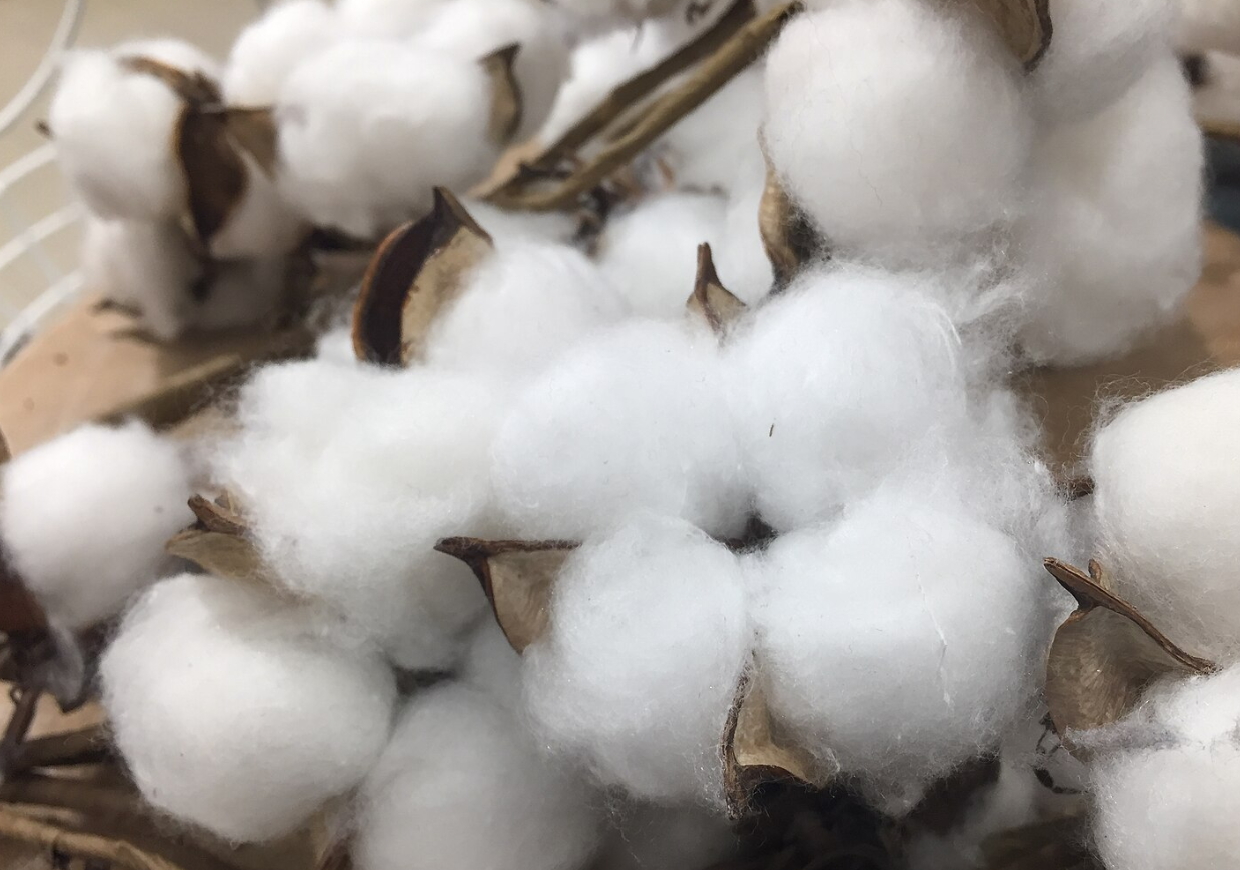
When I saw your hesitation—your visible discomfort—at the sight and touch of raw cotton, my heart tightened. Not in criticism, but in understanding. That moment was not yours alone; it was centuries deep. The cotton boll, ironically soft enough to clean the blood from our cotton pricked fingers, carries within its fiber the ache of history. For Black Americans, cotton is not just a crop—it isa relic, a witness, a wound.
Yet, cotton itself is innocent. It did not enslave our people, granted it was the tool used to abuse. It did not whip their backs or chain their wrists. It simply grew. It was used—twisted by greed, plucked by stolen and often swollen hands, spun into the fabric of empires. But in its silent softness lies a truth that transcends the pain: our people made it sacred through endurance.
Ralph Ellison once said of his historical family in Beaufort, South Carolina, in 1862,
That confession of reclamation is the very heart of our struggle—and our triumph. The people we descend from, “Grandmama’nem,” as we lovingly say, did not merely pick cotton. They built civilization from it. Their hands transformed seed into sustenance, pain into progress. It was their skill, their labor, their blood, and their relentless spirit that created the Cotton Kingdom—the economic backbone of America’s rise and Europe’s wealth.
But few acknowledge that the contribution and genius behind the cotton seed, the gin, and the cultivation itself came from West Africa. The knowledge systems, agricultural mastery, and cultural intelligence that made cotton thrive on American soil were African technologies—transplanted, enslaved, but never extinguished. Our ancestors, uprooted from Mali, Benin, the Gambia, Senegal, et al brought not only their bodies, but their knowing … their ancestral brilliance.
Serena, I know what that cotton represents to you—it feels like touching pain. Yet, I ask you to feel it again, differently this time. Not as a reminder of humiliation, but as a symbol of a blood sacrifice that fed our victory. To hold cotton is to hold the story of how we, as a people, turned cruelty into culture, tears into courage, bondage into beauty, oppression into art.
That is why I’ve dedicated my life to telling this story through the lens of “Grandmama’nem.” The Cotton Pickers of America Monument and Museum—is a national and international movement to honor the millions who toiled and triumphed through cotton. The monument, designed by the legendary sculptor Ed Dwight, stands as both an elegy and a celebration. It carries the spiritual endorsement of the late Dr. Maya Angelou, B.B. King, and Bobby Rush (Bluesman)who served as honorary chairs of this sacred movement.
We invite you, Serena—not just as an icon, but as a daughter of this lineage—to lend your voice, your strength, your light to this cause. You have redefined grace under pressure on the global stage; now, we ask you to join us in re-defining the narrative of our past. We must honor them.
Help us to build what has never been built; Honor what has never been honored; Respect what have never been respected; and thank those who have never been properly thanked—Let’s build a monument to Grandmama’nem and all the unnamed bleeding hands that picked freedom one boll at a time. Together we shall make visible what history has too long rendered invisible and insignificant.
Please, have your people call my people. Let’s talk about this extraordinary international project—a legacy that belongs to all of us.
Because, Serena, cotton is not our shame. It is our story. It is our truth. It is our inheritance. It is the softest proof that from sorrow can come strength, and from struggle, our sovereignty!
With love, honor, and unwavering faith in our collective beauty,
C.Sade Turnipseed, MS/MBA/PhD,
Public Historian • Educator • Founder, Cotton Pickers of America Monument and Museum, Khafre, Inc., Executive Director


