

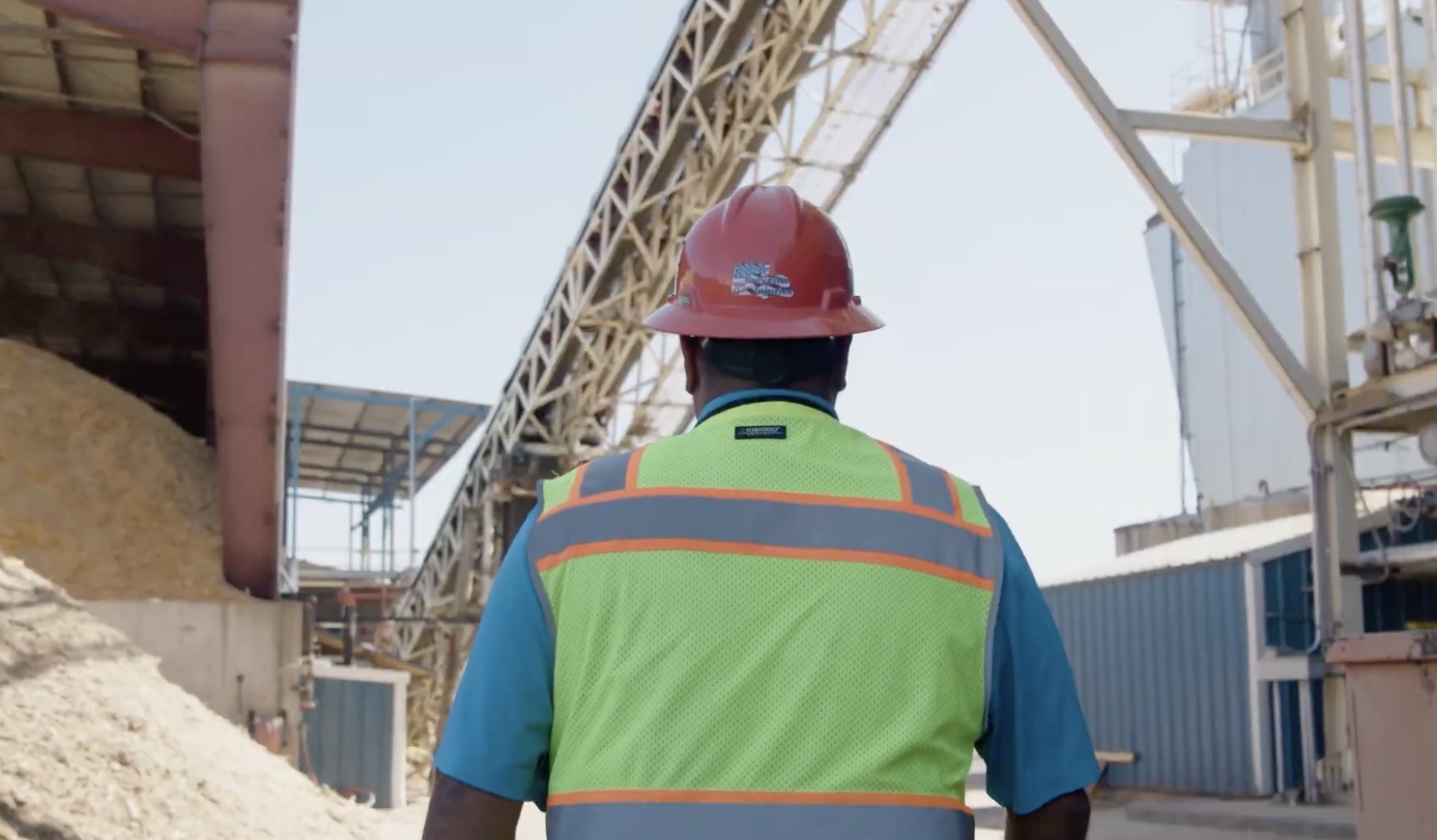
We would like to provide the link from the forestry service, about thier job opportunties.
https://drive.google.com/file/d/1hXyERXgY0Wds6Sr-AtDSZW0lg4p2hca6/view
As well as the following links to short videos:
For additional information, career pathways, and resources, visit: https://www.caforestryworkforce.com/
IndigenousNetwork attended an American Community Media briefing this week on the California Forestry Sector Jobs Initiative, a program that tries to answer two problems at once: a rough job market and a worsening fire crisis. The pitch was simple enough. California needs more people working across the forestry sector, from field crews to office staff, and the state wants a bigger pipeline at a moment when wildfire has become a year-round fact of life.
But from an Indigenous news perspective, the briefing also landed in a much larger conversation already taking shape across California, where tribes are pushing for recognition that Native stewardship, cultural fire, and tribal authority are central to any honest discussion about forests now. California’s own current policy direction reflects that shift. The state’s Tribal Wildfire Resilience grants fund projects tied to wildfire resilience, forest health, and cultural fire, and Senate Bill 310 created a path for cultural burn agreements with California tribes.
The amazing Sandy Close, the longtime journalist and founder of American Community Media, opened the call by putting the initiative inside a wider employment slowdown. She noted that recent college graduates are facing one of the hardest labor markets in years, while climate impacts and wildfire risks are getting worse. That framing gave the briefing some immediate relevance. It did not present forestry as a niche industry tucked away in rural California. It presented it as part of the state’s broader attempt to respond to climate pressure, workforce shortages, and public anxiety about fire. Matt Dias, president and chief executive officer of the California Forestry Association, said the initiative has been in development for nearly two years and is meant to make the private forestry sector more visible to communities that have not traditionally been recruited. “The whole idea of this initiative is try to build new partnerships, new knowledge base within communities across California,” he said.
Dias returned several times to the idea that the forestry sector has failed to reach enough people. He said the industry has not done a good job engaging Southern California, Bay Area communities, or underserved communities more broadly, even as the sector says it wants new workers and new thinking. When asked directly what has kept women and communities of color out of the field, he gave one of the clearest answers of the briefing: “It’s really that we have not done our job well.” That line was very interesting and also echoed a familiar pattern in Indigenous reporting, where exclusion is explained in many different contexts. Is it power or pipeline?
Dias repeatedly said tribes are part of the partnership needed to confront wildfire. He described the fire crisis as something no one sector can solve alone. “There’s no way that the forest product sector, the private sector can do it alone,” he said. “There’s no way that the federal government can combat it alone.” He framed the initiative as a call for “new voices” and broader participation. But the discussion still centered a private industry workforce model first, while tribal leadership remained mostly referenced as part of a coalition. In the current Indigenous news climate, that difference matters. Tribal nations in California are not simply being invited into wildfire policy. They are already reshaping it. The state has formally moved toward cultural burn agreements with tribes under SB 310, and its own tribal stewardship policy describes a new era of tribal-state partnership grounded in truth, healing, and the recognition of Native stewardship practices.
The gap between those two frames, inclusion and authority, is where a lot of California’s present debate now sits. A jobs initiative can promise training and access, and that may help some people. But Indigenous communities are also asking who gets to define forest health, who gets to decide what stewardship looks like, and whether Native expertise is being treated as essential or simply useful. Those are different questions. California’s Tribal Wildfire Resilience grants already recognize that wildfire resilience work in tribal communities can include training, workforce development, and cultural burning. That means the state itself is slowly moving past the old model where tribes are thanked for traditional knowledge but kept at the edge of actual implementation.
Dias spoke with the most force when he described the scale of the crisis. “We’ve burned well over 11 million acres in this state,” he said, calling wildfire an “existential crisis.” He tied that not only to destroyed towns and lost lives, but to damaged water systems, smoke-choked air, and the broader condition of life in California. That language may sound sweeping, but it reflects a real policy mood. The governor’s Wildfire and Forest Resilience Task Force released 25 key deliverables for 2025 focused on protecting communities from catastrophic wildfire and climate-driven risk, while federal budget documents have also emphasized continued investment in the wildfire workforce even as the structure of federal fire management is under review.
The briefing also tried to make the work look practical rather than abstract. A short video introduced workers across the industry, including a skidder operator, office staff, a regeneration forester, a superintendent, and an HR coordinator. One worker said, “There’s endless possibilities,” while another stressed that “you don’t have to come with experience to learn those new jobs.” Dias reinforced that point later by saying the initiative reaches beyond foresters in the woods and includes jobs in trucking, facilities, welding, sales, IT, and mills. He said the private forestry workforce in California is around 55,000 people, with roughly 90 jobs posted now and perhaps 150 to 200 soon. For readers in Native communities, that kind of workforce language may be useful, especially for younger people looking for stable work tied to land, fire, and climate. Still, the larger question remains whether these jobs are being imagined as a path into stewardship, or mainly as labor for an existing system that still has not fully caught up to the politics of tribal sovereignty.
One of the sharper moments came near the end, when a reporter asked about the relationship between logging and fire prevention. Sandy Close called it “a very good journalistic question,” and it was. The forestry sector has long struggled to convince the public that timber harvest and forest health are not automatically in conflict. Dias argued that California has moved beyond that old binary and that “forest management has to occur in California or we are going to be in dire straits.” That may be persuasive to some audiences, but Indigenous coverage has good reason to stay skeptical of any broad claim that wraps extraction and stewardship into the same language without being specific about governance, consent, and land history. At this point in California, the public conversation is no longer just about whether forests need treatment. It is about whose treatment counts, whose authority is respected, and whether the state is serious when it says tribes should lead. California’s recent cultural burn framework suggests that, at least on paper, the answer is beginning to change.
What the briefing illuminated was a picture of a state trying to recruit its way through a climate emergency. It was practical, a little defensive, and at times more candid than these events usually are. Dias admitted the sector has failed to reach the people it now wants. He insisted the opportunities are broad. He argued that wildfire has turned forestry into an all-hands issue. All of that may be true.
But in the Indigenous news climate right now, maybe the bigger story is that California is being pushed to move beyond workforce language alone... And today conversation risks stopping at diversity when the real issue is stewardship. We must ask these questions as well.


