
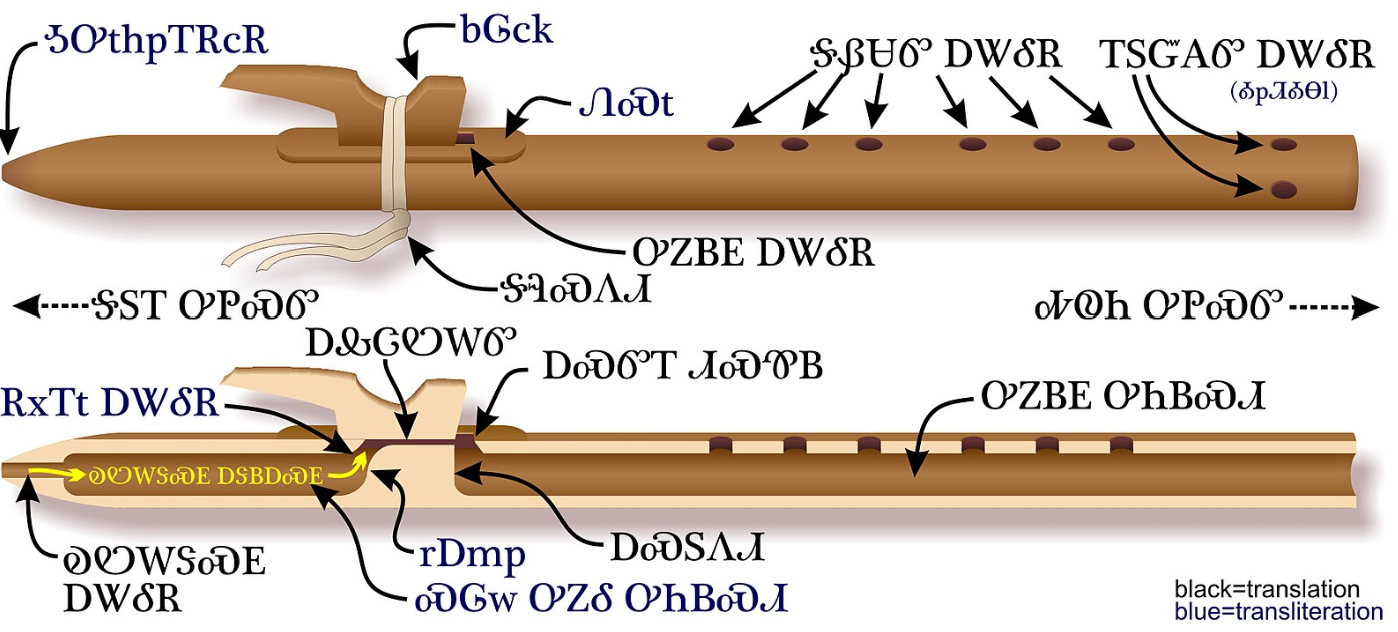
Image: Composite image of the outside and inside of a Native American flute, with Cherokee-language labels, by ClintGloss, Wikimedia
A language is a direct expression of a people's culture, beliefs, and way of life. When a language is lost, the unique worldview and cultural expression it embodies is also at risk of being lost. Languages connect younger generations to their elders, their ancestors, and their cultural roots, helping to maintain a sense of identity, pride, and belonging.
Indigenous languages are the vessels of indigenous history and traditional knowledge, which includes unique understandings of the environment, medicine, and sustainable practices. The strength of a language is a direct indicator of a culture's ability to preserve its heritage and reveals a culture's identity, and connection to its heritage and land, and its resilience against the genocidal forces of colonialism. It acts as a vital tool for passing down traditions, knowledge, and values, shaping a community's sense of belonging and collective pride. Many spiritual, religious, and ceremonial activities are conducted exclusively in the indigenous language, making it crucial for preserving these practices.
Other social benefits of indigenous language revitalization include the strengthening of bonds within families and communities, and the enhancement of indigenous well-being, as speaking one's mother language fosters a stronger sense of self and is linked to better mental health outcomes. Revitalized languages can support cultural tourism, create niche markets for cultural products, and enhance employment opportunities in cross-cultural fields. Supporting Indigenous languages enriches global diversity that offers different perspectives on understanding and interacting with the world. The effort to preserve and revitalize indigenous languages leads to greater respect for diversity and a deeper intercultural understanding.
ʻO ka ʻōlelo ke kaʻā o ka mauli is Hawaiian for “Language is the fiber that binds us to our cultural identity” and the motto of Ka Haka ʻUla O Keʻelikōlani College of Hawaiian Language at the University of Hawaiʻi at Hilo which assures the revitalization and continued advancement of the Hawaiian language so that the state’s indigenous language achieves parity with English in all aspects of public life. With only 10% of the state’s current population, Native Hawaiians have risen to the challenge with a slow but steady pace of revitalization success that has earned internationally recognition and its universities earning the patronage indigenous language revitalization scholars throughout the Western United States as well as influencing the development of both US domestic policy and international law as a veritable social movement spreading north and eastward across the United States. While a typical American reader may be surprised to know that “Hawaiian" is actually a spoken, living language, Maui County in 2022 voted to move forward with bilingual governance, establishing equal dignity for the state’s indigenous and colonial languages in that jurisdiction’s regulatory mission.
Indigenous language revitalization is crucial today for cultural preservation, identity, and well-being, as languages carry unique knowledge, worldviews, and traditions that are vital for community continuity and healing. The effort is also important for reconciliation, as it helps to counteract historical trauma from colonization and assimilation. Revitalization is essential for maintaining a healthy cultural diversity that enriches all of society.


