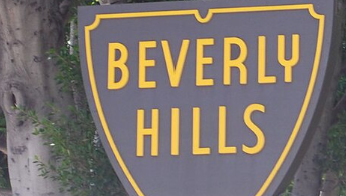
Beverly Hills offers an unusually revealing microcosm of a small city facing a political transformation that is leading to an increase in tension, at times, malice, and a growing divide among its residents.
From 1964 to 2020, except for 1980 when the city voted for Ronald Reagan, Beverly Hills has historically voted for a Democratic president. Then came 2024, and the tides changed— Beverly Hills went for Donald Trump.
The battleground that is playing out at the Beverly Hills school board is the clearest example of our culture wars.
Once considered one of the finest school districts in the nation, Beverly Hills schools have been on the decline for the last decade. And despite substantially greater financial resources, Beverly Hills now trails comparable high schools in Los Angeles County.
On the heels of Trump’s win, two new school board members, Sigali Sabag and Russell Stuart, joined sitting member Judy Manoucheri to consolidate a conservative majority on the Beverly Hills school board.
The three board members wasted little time implementing their agenda.
1. VIOLATION OF BYLAWS: In a move to consolidate their power, the three majority board members Judith Manoucherhi, Russell Stuart and Sigali Sabag violated district bylaws by blocking fellow board member Dr. Amanda Stern from her rightful position as vice president of the school board. Daniel Lifshitz, a Horace Mann parent, is suing the district because of the violation.
2. RESTRICTIONS ON CLASSROOM SPEECH: Before joining the board, Sigali Sabag complained about elementary music teacher Judith Chan after Chan showed an animated Martin Luther King Jr. video and taught students “We Shall Overcome” during Black History Month. Sabag demanded an investigation claiming Chan was indoctrinating her students. Chan was ultimately cleared. In July of 2025, as a board member, Sabag misrepresented the incident to advocate for stricter classroom guidelines regarding discussions on sensitive topics. Seven teachers came to appeal to the board during their summer vacation about their concerns with the resolution. Judith Chan spoke, as well as challenged, Sabag’s account of the matter. The teacher’s appeal was ignored, and the resolution passed with a great deal of pressure on the two minority board members to comply.
3. RACIAL DISCRIMINATION AND QUESTIONS OF UNEQUAL TREATMENT: Black students, parents and employees have repeatedly raised allegations of anti-Black racism within BHUSD, concerns that have resulted in multiple lawsuits and, significantly, a California Department of Education finding that the district violated Title VI by failing to adequately respond to a race-based bullying incident and racially hostile environment. Against that backdrop, parents have questioned why the board moved forcefully to adopt a resolution combating antisemitism and recognizing Jewish American Heritage Month while initially declining requests for comparable recognition of Black and other minority students.
4. A FAILURE OF VETTING AND CAMPUS OVERSIGHT: In February 2026, a social-media influencer, Ben Azoulay, was invited to speak on campus to the student-led Israeli Club at Beverly Hills High School. When outraged parents and community members questioned how and why Azoulay, who had a prior criminal conviction related to the rape of a minor, as well as misogynistic online commentary, was invited, the 3-board majority initially refused to accept any accountability and claimed they followed protocol. One parent, Jackie Kruger, was escorted out by security when she tried to question the board about the incident. President Manoucherhi kept interrupting Ms. Kruger, which led to a contentious exchange.
What is happening on the school board reflects broader changes across Beverly Hills. The conflicts playing out in our schools mirror the divisions that are increasingly visible throughout the community.
Beverly Hills is often caricatured as a city defined by grandeur, celebrity, and extraordinary wealth. A wealthy contingent certainly exists, but that image is not the reality for most residents. Nearly 60 percent of residents are renters, and roughly 38 percent are foreign-born. Many families make financial sacrifices to live here because of the public schools. In a small city of app. 30,000 residents, we have a significant senior population of 7,800, many of whom are considered lower income.
Our community is a mix of professionals and working people raising families, immigrants building new lives, longtime residents who want to stay as we age, and newcomers trying to put down roots—at one time, we shared common goals and values.
Sadly, that is the community we once were, and it is slowly disappearing. The social and political transformation of Beverly Hills has many residents feeling marginalized and wondering if they can continue to live in this community.