
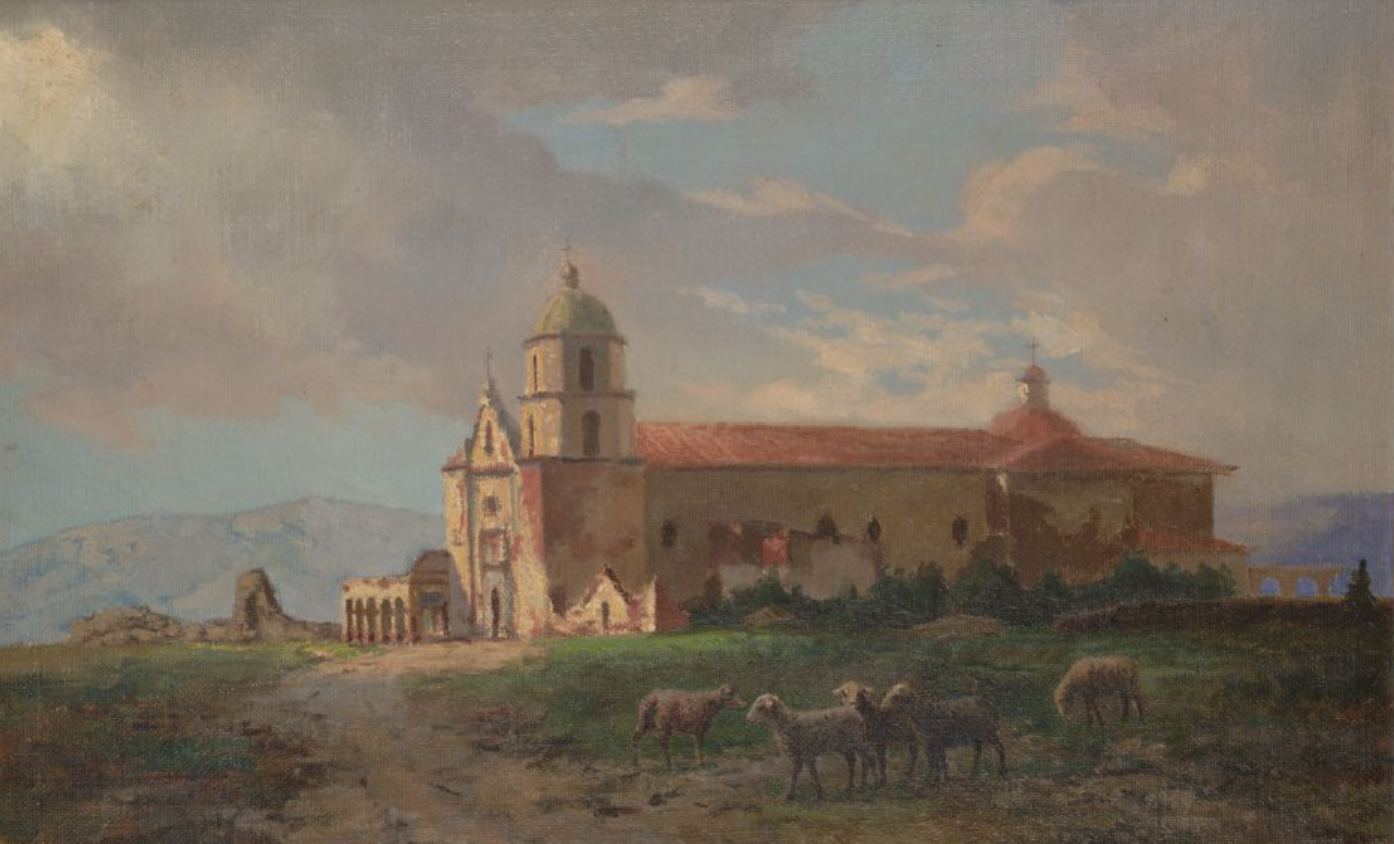
Photo: Mission San Luis Rey de Francia by Christian August Jorgensen, The Bancroft Library, University of California, Berkeley, Wikimedia
A new documentary reexamining the legacy of the Ramona Pageant is preparing to make its world premiere at the Palm Springs International Film Festival in January 2026. But one of the most powerful moments in the film’s early trailers doesn’t come from the stage or archives—it comes from a quiet gathering beneath a living piece of history.
Sitting under the Old Mission San Luis Rey’s ancient pepper tree, believed to be the oldest pepper tree in California, four respected Luiseño cultural leaders speak plainly about memory, truth, and the survival of their people: Captain Mel Vernon, Past Chairman Chris Devers, tribal elder and educator Diania Caudell, and community leader Eli Santana.
Together, they ground the documentary in the lived experience of the Luiseño Nation—a voice too often overlooked in romantic retellings of “Old California.”
Reclaiming the Story Behind Ramona
For more than a century, the Ramona Pageant has presented a dramatic version of California’s past, based on Helen Hunt Jackson’s 1884 novel Ramona. While the story was originally written to expose the mistreatment of Native peoples, it was reshaped over time into a nostalgic celebration of the rancho era—leaving out much of the trauma Indigenous communities endured.
This new documentary confronts that history directly.
In the trailer, Vernon, Devers, Caudell, and Santana speak about the realities behind the myth: forced relocation, cultural suppression, and the struggle to hold onto land, language, and ceremony during the Mission and early American eras.
Their presence brings the narrative back to where it belongs—with the people whose ancestors lived this history.
A Conversation Under the Pepper Tree
The setting itself is symbolic.
The Old Mission San Luis Rey, known to the Luiseño people as Palaaxcha, sits on ancestral land where generations lived, worked, resisted, and rebuilt. The pepper tree—planted in the 1830s—has witnessed every chapter since the Mission period.
Under its shade, the four speakers reflect on:
• The survival of Luiseño culture despite the Mission system
• The displacement of Native communities depicted in Ramona
• The Pageant’s complicated legacy—both harmful and educational
• The importance of Native people telling their own history today
• What truth, healing, and representation mean for future generations
Their voices anchor the film with authenticity, memory, and responsibility.
A Historic Moment for Luiseño Visibility
For many years, conversations about Ramona have taken place without the full participation of the tribes whose history the story attempts to portray. This documentary signals a shift.
By placing Luiseño leaders at the center of the narrative, the filmmakers acknowledge that no story of California’s origins can be told accurately without Indigenous authority and presence.
Captain Mel Vernon’s message in the trailer is especially clear:
California history cannot be healed until it is honestly told.
Premiere at Palm Springs Film Festival
The documentary will premiere at the Palm Springs International Film Festival, January 2026, introducing audiences from across the world to a deeper, more truthful understanding of the Ramona Pageant and the Luiseño people whose experiences inspired it.
For the Luiseño community, the film represents both recognition and restoration—a chance to speak directly to the public about their history, their survival, and their future. Human Generated


