
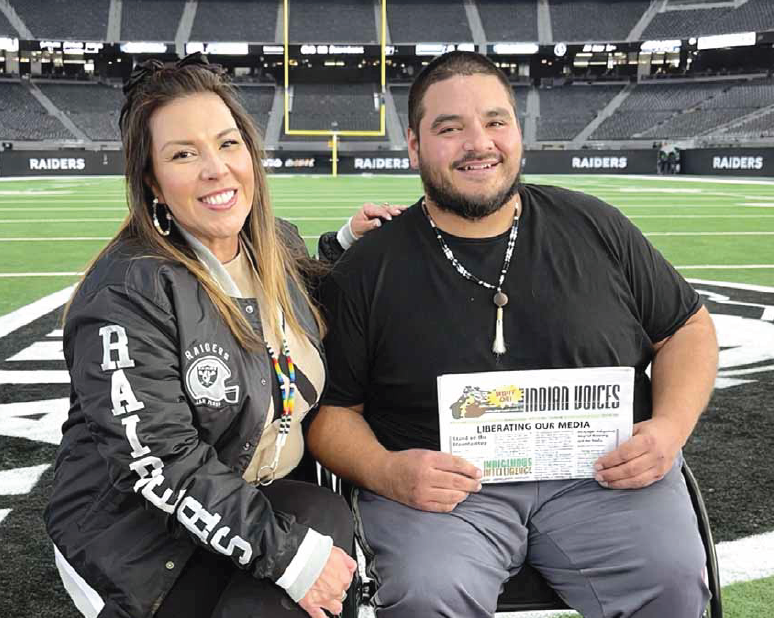
David Brown was born in Fontana, California, and moved to Las Vegas when he was two years old. He grew up like a lot of kids here outside as much as possible, always moving, always competing. Sports weren’t something he did on the side. They were part of how he saw himself and how he fit in with people.
He grew up in a family of four siblings an older brother and sister, David in the middle, and a younger brother. In that kind of household, you don’t get to sit out for long. Between siblings and school, there was always a game going, always something to prove. David played football and basketball, and he was also into skateboarding and biking. Eventually, motocross and extreme sports became what he loved most. He describes it simply: going faster, pushing harder, chasing that feeling of freedom.
Discovering a Hidden Heritage
For most of his childhood, David believed he was Mexican. His paternal family spoke Spanish, and no one really talked about Native ancestry. It wasn’t until he was a teenager that he learned his identity had deeper layers.
His mother, Angela Brown, is Native American with family ties to the Texas Band of Yaqui, also known as Yaqui/Hiaki (Yoeme). David also carries Yupik and Chukchi ancestry through his mother’s side. His father, Robert Brown, is of German and other European descent. When David started putting all of it together, it made him realize that his story wasn’t one simple label it was multiple histories living in the same family, and some of them had been kept quiet for a reason.
David learned that his great-grandfather’s people were Yaqui/Hiaki, an Indigenous nation from the Río Yaqui valley in Sonora, Mexico. In the late 19th and early 20th centuries, Yaqui families faced severe persecution, forced removal, and enslavement by the Mexican state. Many families survived by hiding blending in, taking on other identities, or moving north into the United States. David’s family was among those who concealed their identity and “passed” as Mexican laborers to survive.
When he learned this around age 16 or 17, it explained things he’d noticed growing up. It explained why his family didn’t fully follow the Mexican traditions people assumed they did. It even explained the food. He remembers meals that weren’t about what outsiders expected, but what felt tied to desert life nopales (cactus pads), eggs, and sausages simple Sonoran staples that connected more to the Yaqui homelands than to the story people put on them.
A Love of the Outdoors
Las Vegas shaped David’s love for open space. He spent weekends fishing at desert lakes, hiking in the mountains, and exploring Nevada’s wide stretches of land. He did well in math and admits he wasn’t into history at the time, but later he came to appreciate how much of his own life and his families was shaped by resilience, silence, and survival.
The Accident That Changed Everything
At fourteen, David went riding at Sunshine Mountain with his father and a friend. He says he felt uneasy that day, but he pushed himself to go anyway. On the track he kept increasing speed until he overshot a tabletop jump, landed in a deep hole, and got launched from the bike.
He hit hard and immediately felt something wrong across his back and ribs. Then came the terrifying part he couldn’t breathe right, couldn’t speak, couldn’t move. He remembers being on the dirt, while his dad paced in panic nearby. His friend tried to keep him calm and flashed him with a peace sign. Paramedics arrived, stabilized his neck, strapped him to a gurney, and rushed him to the hospital.
Doctors later told him he fractured several ribs and damaged his thoracic spine around T9– T12, leaving him paralyzed from the abdomen down.
David also remembers something else that made it heavier: his father, Robert, had purchased the dirt bike. David could see his dad taking it hard, carrying guilt. But David is direct about it he was the one who pushed it too far. Even so, he says his father didn’t stay in that guilt. He became David’s motivator. And David wanted one thing more than anything: his independence back.
The Day He Kicked Help Out of His Room
While David was still in the hospital, his mother tried to connect him with two men she knew Billy and Reggie who were involved in wheelchair sports. She wanted David to meet someone who could show him that life didn’t end there, that sports and competition were still possible.
David wasn’t ready. He was overwhelmed and still trying to process what had happened. When Billy and Reggie came into his room, David got angry and told them to leave. He kicked them out. He says now he understands his mom was trying to help, but at the time he “wasn’t trying to hear anything.” He was still stuck in the belief that this couldn’t be permanent.
The Long Recovery: Anger, Denial, and Embarrassment
Rehabilitation took months of inpatient care. David had to learn everything again how to move, how to transfer, how to live in a wheelchair. The physical work was exhausting, but the emotional part hit just as hard.
He describes that early period as anger and denial. He truly didn’t believe he would be in a wheelchair forever. Seeing his reflection in a wheelchair for the first time crushed him. He felt like his independence was gone, like parts of his identity were stripped away. When he returned to school still paralyzed, he faced insensitive comments that stayed with him. There was embarrassment too being seen differently, being treated differently, feeling exposed.
Learning Independence Again
With time, physical therapy, and support from family and peers, David slowly rebuilt his independence. It took about two years before he felt truly confident maneuvering his chair on his own. For him, that wasn’t just physical progress. That was getting a piece of himself back. Independence became emotional. It became identity.
Returning to Sports and Becoming the One Who Stays
Eventually, David returned to sports through adaptive programs. Wheelchair basketball brought him back to something familiar: the grind of practice, the competitiveness, the feeling of being part of a team again. He says what surprised him most was that the drive didn’t disappear after the accident. The love of movement didn’t disappear. It just had a different form.
Over time, he noticed new players showing up who were still in the early stage still adjusting, still angry, still unsure. Without planning it, David started helping. Sometimes it was gear. Sometimes it was tips. A lot of the time it was just listening and telling the truth about how hard the beginning is.
Mentorship didn’t start as a goal. It became something he grew into because he knew what it felt like to be at the bottom of that learning curve.
About ten years have passed since those early hospital days. Reggie has since passed away, and Billy moved out of state, but David still credits them as part of the turning point even if he rejected it at first. He also still has close friends from before the accident and friendships he built after. He says the conversations shifted more reflection, more “remember when,” more learning each other through the change but the bonds stayed.
Outside of sports, David spends time gardening and growing chilies. It keeps him grounded, he says. It gives him something steady that isn’t measured in wins, speed, or progress.
Continuing the Journey: Las Vegas Raiders Wheelchair League
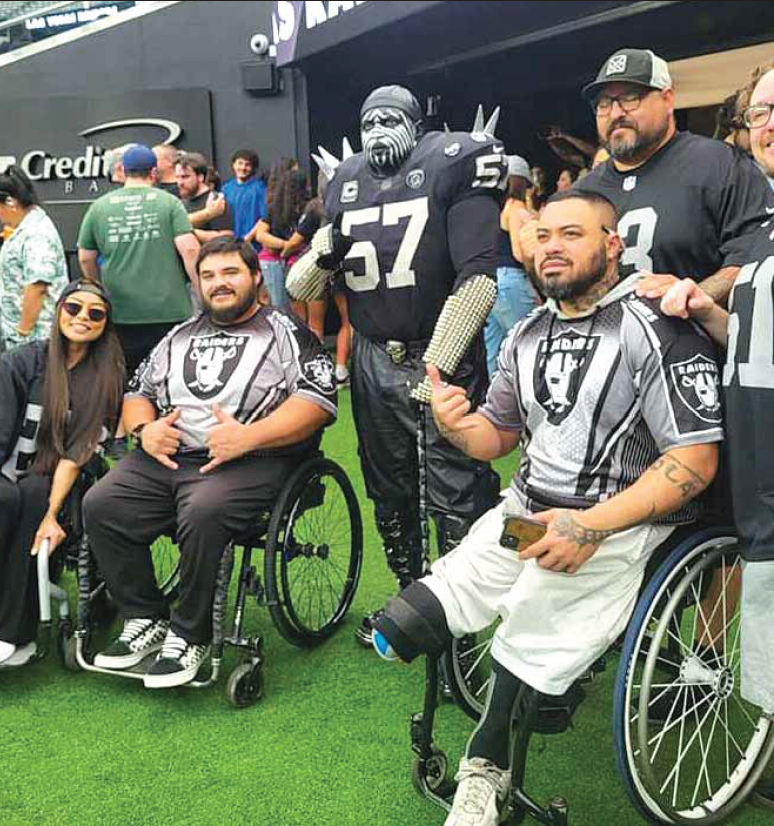
For the last two years, David has competed with the Las Vegas Raiders Wheelchair League. He describes it as more than a team competitive, disciplined, and real community. There are moments when the team gets opportunities to spend time around NFL players, something David appreciates not for attention, but for what it represents: visibility, respect, and proof of what adaptive athletes can do when people take them seriously.
For David, representing the Raiders is also personal. It’s showing up as who he is an athlete, a mentor, and a man carrying Yaqui, Yupik, Chukchi, German, and European roots without having to shrink any part of himself.
Why He Shares His Story
David shares his story with Indian Voices for the people who are where he once was angry, embarrassed, overwhelmed, or convinced life is over because it looks different now. He wants them to know it’s normal to reject help at first. It’s normal to be furious. It’s normal to grieve.
He also wants people to understand that survival doesn’t always look dramatic. Sometimes it looks like a family keeping heritage quiet so they can stay safe. Sometimes it looks like a teenager learning how to push a wheelchair down a hallway without help. Sometimes it looks like you show up to practice, again & again, until you feel like yourself.
David Brown honors the resilience of his ancestors and carries it forward in his own way through sport, through community, and through being willing to speak plainly about what the hardest parts really felt like. His journey is proof that identity and passion can survive a life-altering moment and that the road back, while not easy, is possible when you don’t walk it alone.


