

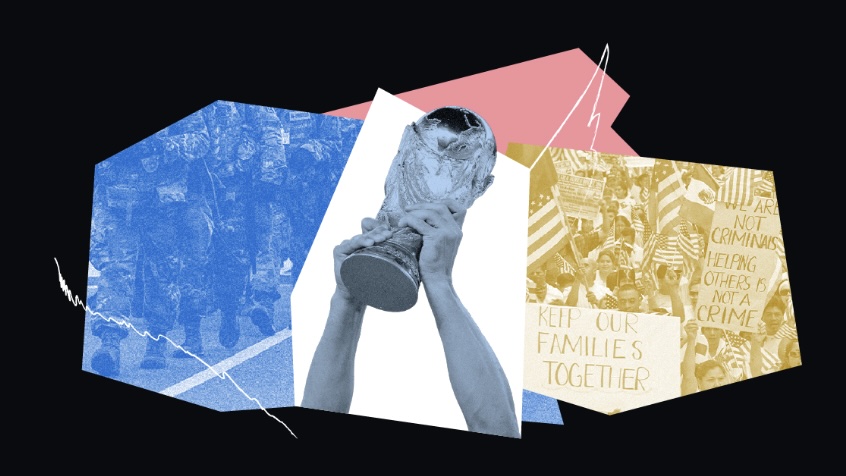
“There is no successful mega sporting event with a backdrop of human rights abuses as serious as the ones we're discussing. This World Cup is not a World Cup for the world.” — Minky Worden, Human Rights Watch
As the United States prepares to host the majority of matches in the 2026 FIFA World Cup, excitement over the world's largest sporting event is increasingly intersecting with concerns about immigration enforcement, civil rights, labor protections, press freedom, and the treatment of vulnerable communities.
At a recent briefing hosted by American Community Media, representatives from Human Rights Watch, the NAACP, and the Migration Policy Institute argued that the tournament presents both an opportunity and a test. While FIFA has repeatedly promoted the event as the largest and most inclusive World Cup in history, panelists questioned whether that vision can be achieved amid current U.S. immigration policies and growing concerns about civil liberties.
The 2026 tournament will be unprecedented in scale. A total of 104 matches will be played across the United States, Canada, and Mexico, with 78 of those matches taking place in the United States alone. Human Rights Watch's Minky Worden compared the event to hosting "78 Super Bowls," emphasizing the immense logistical and social implications for host cities.
Worden noted that FIFA introduced human rights requirements into the World Cup bidding process following widespread criticism surrounding previous tournaments in Russia and Qatar, where concerns ranged from migrant worker deaths to restrictions on free expression. Yet she argued that many of those commitments remain largely unenforced.
"The trends are bad and could get worse," she said, citing concerns over immigration enforcement, visa restrictions, protections for LGBTQ people, and the rights of journalists covering the tournament.
Among the most significant concerns discussed was immigration. Several panelists pointed to visa restrictions affecting dozens of countries, including nations that have qualified for the tournament. Human Rights Watch argued that visa bans impacting countries such as Iran, Haiti, Senegal, and Côte d'Ivoire raise questions about whether the tournament can genuinely claim to welcome the world.
The organization has called for what it describes as an "ICE truce," modeled after the Olympic Truce tradition, urging federal authorities to suspend immigration enforcement operations during the World Cup. Advocates argue that immigrant families should not have to fear detention or deportation while attending matches or public events connected to the tournament.
Human Rights Watch Children's Rights Senior Coordinator Katherine LaViolette focused on the impact such policies can have on children and families. She described a case documented by the organization involving an asylum-seeking father who attended the Club World Cup with his two children and was later detained by Immigration and Customs Enforcement. According to Human Rights Watch, the children witnessed their father's arrest and were separated from him before eventually being reunited with their mother. The father was later deported.
LaViolette argued that FIFA has moved too slowly in implementing comprehensive child safeguarding policies, despite repeated warnings from human rights organizations. While FIFA recently introduced new safeguarding measures, she said there may not be enough time to adequately train staff, establish accessible reporting systems, or ensure meaningful protections before the tournament begins.
"The World Cup needs to raise the bar for human rights and not lower it," she said.
Representing the NAACP, Senior Vice President of Strategy and Advancement Jamal Watkins framed the issue more broadly, arguing that civil rights, worker protections, and community well-being must remain central to planning efforts.
"We want to make sure that the experience for fans, players, community, and workers is at the highest level," Watkins said. "The human rights issues as a backdrop undermine what the sport is about and what the World Cup is about."
Watkins noted that many host cities face significant financial pressures related to security, infrastructure, and event operations. While large amounts of money are expected to flow through host communities, he questioned who will ultimately benefit.
"Money will flow from the games," he said, "but it'll flow into corporations and entities that are large in scope and not necessarily meet the community needs and investment needs of the hyperlocal communities that these games are taking place in."
The briefing also highlighted concerns surrounding journalists. Organizers estimate that approximately 50,000 accredited journalists will cover the tournament, with many more reporting independently. Panelists warned that visa restrictions, border crossings between host countries, and potential confrontations during protests could create obstacles for members of the press. Human Rights Watch cited previous incidents involving journalists covering demonstrations in cities such as Los Angeles, Chicago, and Minneapolis.
Migration Policy Institute Senior Policy Analyst Ariel Ruiz Soto offered a more measured assessment of the immigration landscape. While acknowledging concerns over visa restrictions and travel barriers, he noted that large-scale immigration enforcement actions at tournament venues remain unlikely.
"The World Cup is the largest watched event across the world," he said. "The spotlight that would be placed on the administration if something like this were to happen would be largely negative internationally."
Ruiz Soto emphasized that communities should remain informed about their rights while also recognizing that many worst-case scenarios discussed by advocates have not materialized during previous major sporting events.
Still, as the countdown to kickoff continues, advocates say the coming weeks remain critical. Human rights groups are urging FIFA, local organizers, and government officials to take additional steps to protect immigrant families, workers, children, journalists, and visitors before the tournament begins.
For many speakers, the question is larger than soccer itself. The World Cup has long been celebrated as a global gathering that transcends politics, borders, and cultural differences. Whether the 2026 tournament fulfills that promise may depend not only on what happens on the field, but also on how host nations choose to welcome the millions of people arriving to watch the world's game.


