
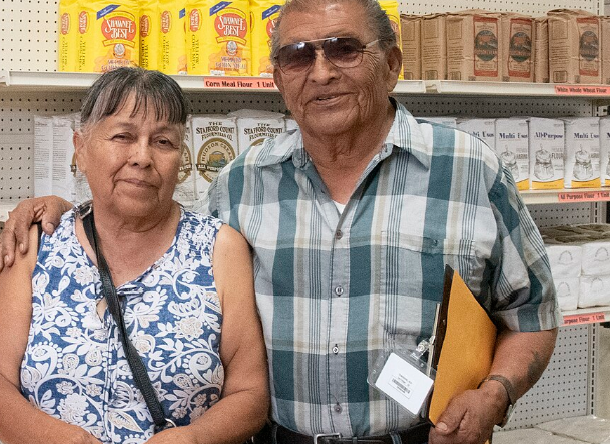
Photo: Roy and Santana Townsend of San Felipe Pueblo, NM have checked in with the Five Sandoval Indian Pueblos, Inc. (Five Sandoval) food distribution center staff to ensure they are approved; then with a items checklist, they step over to the food room to select their food staples, in Bernalillo, NM, on September 10, 2019, USDA.gov, Wikimedia
With costs on the rise, it is becoming more and more difficult for working families to afford to feed their families.
This problem is particularly prevalent for Tribal communities. Between 2016 and 2021, almost a quarter of American Indian Alaska Native households reported experiencing food insecurity, the highest rate among all racial and ethnic groups.
Making the situation worse, Indigenous families are prohibited from using all the nutritional assistance they deserve. Families who qualify for both the Supplemental Nutrition Assistance Program (SNAP) and the Food Distribution Program on Indian Reservations (FDPIR) are not allowed to use both programs in the same month.
That restriction is completely unfair. Indigenous families are being forced to make a choice between the food assistance programs they use; a choice no other family must make. There is no similar ban on using any other combination of food assistance programs.
All Nevadans deserve a roof over their heads and food on their table. I’m committed to eliminating the barriers that make it harder for Nevada families and Tribal communities to get ahead.


.jpg)