
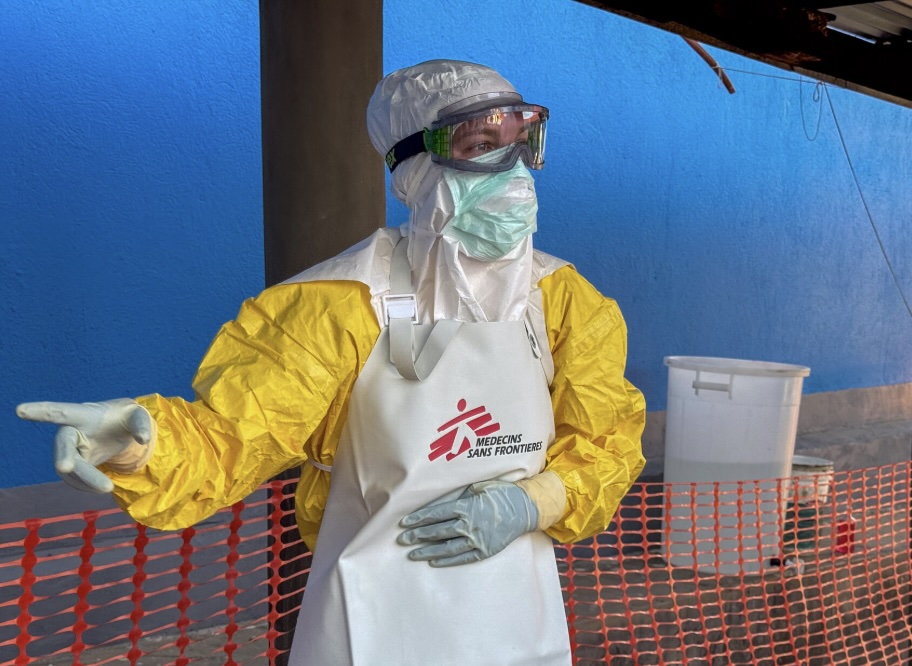
Health experts are warning that an Ebola outbreak in Central Africa could become one of the most serious on record as cases continue to rise in the Democratic Republic of Congo and neighboring Uganda. During a briefing hosted by American Community Media, physicians, conflict researchers and members of the African diaspora discussed the challenges of containing the virus in a region affected by armed conflict, fragile health systems and widespread misinformation.
According to the World Health Organization, the outbreak has reached hundreds of confirmed cases in the Democratic Republic of Congo, with additional cases identified in Uganda. Speakers noted that the outbreak is caused by the rare Bundibugyo strain of the Ebola virus, for which there is currently no approved vaccine.
Dr. William Schaffner, professor of preventive medicine and infectious diseases at Vanderbilt University School of Medicine, explained that Ebola is believed to originate in fruit bats before spreading to humans through close contact with infected animals. As the disease progresses, patients can develop fever, vomiting, diarrhea and severe organ failure. He emphasized that supportive care remains the primary treatment and said, "We have no direct antiviral drugs that will treat this infection." He added that identifying cases early, isolating infected patients and tracing close contacts remain the most effective tools available while researchers continue working toward a vaccine.
Schaffner stressed that despite the severity of the outbreak, the risk to the United States remains low because Ebola spreads through direct contact with infected bodily fluids rather than through the air. Hospitals continue to screen patients with relevant travel histories, and infected individuals can be isolated quickly to prevent wider transmission.
Rachel Sweet, a researcher with the Frontline Observatory who has spent years documenting conflict in eastern Congo, said the greatest challenge is not simply the violence itself but the assumptions many people make about the region. "It's not the conflict itself that is going to be the key obstacle to containing the virus," she said. "Instead, it's our clichés about the conflict and about the communities living under it."
Sweet argued that distrust of public health authorities often stems from decades of conflict in which violence and government institutions have become deeply intertwined. She said successful public health efforts depend on working with local doctors, religious leaders and community organizations rather than treating communities as resistant to science. She also urged journalists to avoid oversimplified narratives that overlook the experiences of people living through both conflict and disease.
Pamela Anchang, publisher of Immigrant Magazine, shared interviews with members of African diaspora communities across the United States and found a wide range of responses. While some people questioned reports about the outbreak or said they had heard little about it, others with relatives in the Democratic Republic of Congo described growing anxiety, concerns about stigma and frustration over declining international assistance. Many said they were sending money home to help family members obtain clean water and other necessities.
Anchang said the conversations revealed another challenge beyond the virus itself. "The biggest story is not just the Ebola outbreak," she said. "It's really what it is revealing about misinformation, how dangerous that can be. It's even sometimes worse than the disease, and stigma can outlast the virus."
Speakers concluded that containing the outbreak will depend on strengthening local health systems, supporting community-led response efforts and restoring public trust. They said sustained international assistance and accurate reporting will be critical as health workers attempt to limit the spread of a virus for which no vaccine currently exists.


