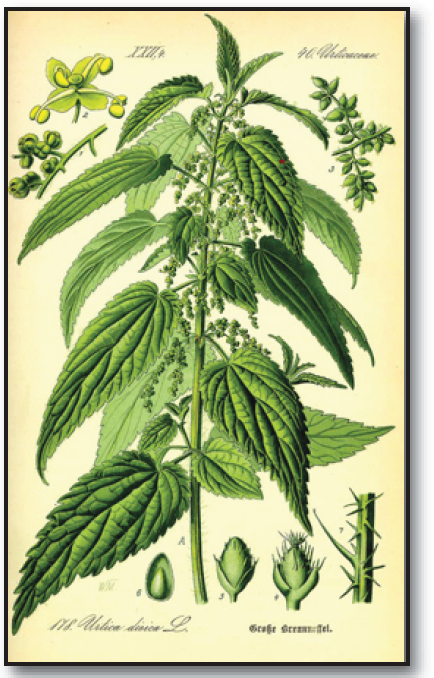
Photo: Stinging Nettle in the Wild
Stinging nettle is native to Europe, Asia, northern Africa, and western North America,
and has also been introduced to many other areas. It grows from early spring through
summer and can reach between 3 to 7 feet tall, with leaves from 1 to 6 inches long. It’s considered a weed in our area and grows in the winter in the canyon and very possibly in your yard. The stems and leaves are very hairy, and most subspecies have hairs that sting — they break off when touched and inject chemicals into the skin that burn. Nettle thrives in areas with a good amount of rainfall and moist soil, and is commonly found in the countryside, near forests and river banks.
Benefits of Stinging Nettle
The leaves, stems, and roots of the stinging nettle plant all have medicinal value.
Stinging nettle is rich in vitamins A, C, D, and K, as well as B complex vitamins, and is also rich in
many minerals including iron, calcium, potassium, magnesium, manganese, phosphorous, iodine,
sulfur, silicon, and silica. Compresses made with nettle tea or powdered dried nettles are also used
to treat wounds, burns, warts, and stings.
Cooking with Stinging Nettle Stinging nettle has a similar flavor to spinach
Compresses made with nettle tea or powdered dried nettles are also used
to treat wounds, burns, warts, and stings. Cooking with Stinging Nettle
Stinging nettle has a similar flavor to spinach and can be used as a direct substitute for any
recipe calling for spinach. Once the leaves have been cooked, crushed, or dried they lose their
sting entirely. You can sauté stinging nettle, add it to smoothies, juice it, add it to pasta dishes
like lasagna, puree it for pesto, add it to soups and stews, or include it in salads.
Step 1 — Harvest
It is recommended that you wear gloves and long sleeves when harvesting stinging nettle, and
keep the gloves on while preparing the nettles as well. The best time to harvest is while the plant is
still young and no more than a foot tall, because that's when the leaves are the most tender — and before the plant starts flowering, since once it flowers the leaves become bitter. Use scissors to snip off the top 4 inches of the plant, which will allow it to keep growing for later harvesting.
Step 2 — Wash
Wash the nettles by agitating them vigorously in a large volume of cold water. A sink or large
bowl works great. All the little bugs or bits of dirt should sink to the bottom. Keep your gloves on for this part.
Step 3 — Blanch
Blanch the nettles by cooking them in boiling water for about 90 seconds, then plunge them into very cold water to stop the cooking. At this point the stinging nettles won't sting anymore and you can do away with the gloves.
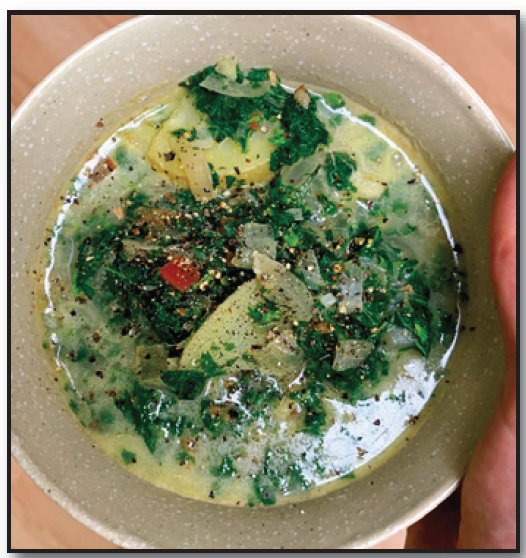
Fresh Nettle Soup with Coconut Milk
Ingredients
3 tablespoons oil or butter
2 onion
4 tablespoons ginger
6 cloves garlic
1 red chili
4 cups water
2 small waxy potatoes
like Yukon Gold
2 cups blanched
squeezed out stinging
nettles
4 tablespoons coconut
aminos or soya sauce
1 can coconut milk or cream - use the thick part!
Instructions
Heat a medium-sized pot over medium heat and
add the vegan butter (or oil).
Chop the onion, garlic, and ginger, add them to
the pot along with a pinch of salt, and sweat for
2–3 minutes.
While the onion mixture sweats, chop your potato into whatever size you like. I tend to end
up with scrabble-tile-sized pieces, but you can go finer if you prefer. Add the potato to the onions.
Add the coconut aminos (or soya sauce, depending on what you're using).
Add the water and bring the soup to a boil. Then reduce the heat back to medium, pop a lid on,
and simmer for 10 minutes or until the potatoes are soft.
While the potatoes are softening, chop the chili pepper and the nettles as finely as you can, and
add them to the soup. Finally, add the coconut milk/ cream, adjust with extra water if needed, and check for seasoning. If you find it's too salty, you can add more coconut milk to tone i