
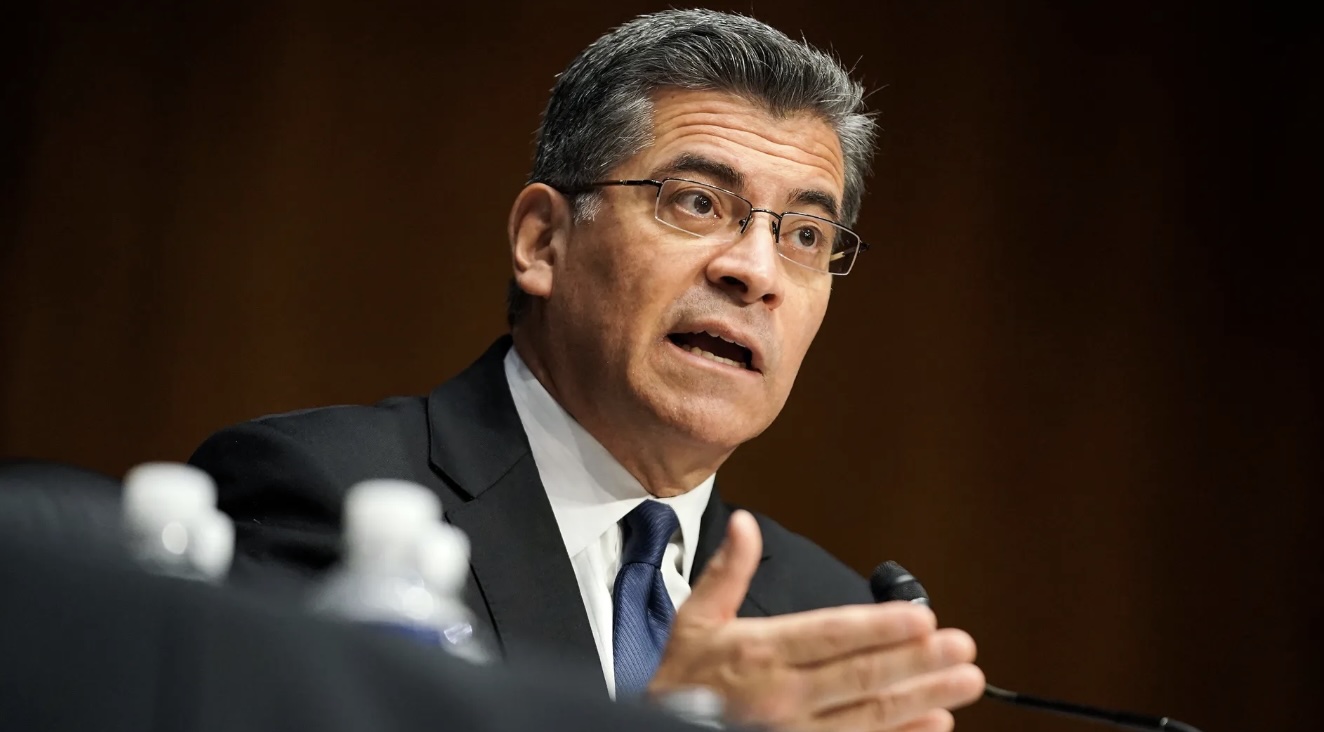
"I know what it means to be the son of immigrants, when your rights are not respected, when you're threatened, and when it's difficult, as hard as you're working, to believe that your government is there for you."
Former U.S. Secretary of Health and Human Services Xavier Becerra is making a familiar argument to California voters: government should work for working families, and the state's next governor must be prepared to defend California from what he describes as unprecedented attacks coming from Washington.
Speaking as his gubernatorial campaign enters its final days, Becerra presented himself as both a seasoned administrator and the son of immigrants who understands the challenges facing many California families. Throughout the discussion, he repeatedly returned to themes of affordability, healthcare access, housing, and protecting immigrant communities from federal immigration enforcement.
Becerra enters the race with one of the most extensive public service resumes among the candidates. He served as California Attorney General, represented Los Angeles in Congress for more than two decades, and most recently led the U.S. Department of Health and Human Services under President Joe Biden. He argued that experience matters at a time when California faces housing shortages, healthcare challenges, homelessness, and growing tensions with the federal government.
"I will not need training wheels when I become governor," Becerra said, pointing to his experience managing federal agencies and defending California in court during the first Trump administration.
Immigration emerged as one of the central topics of the conversation.
Becerra sharply criticized recent federal immigration policies and pledged to use the same legal strategies he employed as attorney general to challenge what he considers unlawful federal actions. He accused Immigration and Customs Enforcement of exceeding its authority and promised to work closely with California Attorney General Rob Bonta to defend immigrant communities.
"We will make sure that our immigrant families know that they are protected," he said.
Drawing on his own family history, Becerra said immigration policy is not merely a political issue but a personal one. His parents immigrated to the United States from Mexico, and he frequently referenced that experience when discussing the treatment of immigrants in California.
He also voiced strong opposition to a recent federal policy affecting green card applicants, arguing that it would unnecessarily disrupt families and create additional barriers for individuals already navigating the legal immigration process.
"These are people who are qualifying to be here," Becerra said. "These are not the criminals. These are not the people that Donald Trump always talks about trying to go after."
Healthcare was another major focus.
Responding to questions about his support for universal healthcare, Becerra rejected claims that he had moved away from single-payer principles. He pointed to his early support for Medicare for All legislation and argued that his entire career has been guided by expanding access to healthcare.
As Secretary of Health and Human Services, Becerra oversaw implementation of major healthcare initiatives, including expanded Affordable Care Act enrollment and Medicare prescription drug negotiations. He cited those accomplishments as evidence that he can deliver practical results rather than simply campaign promises.
"I've been consistent throughout my public life," he said. "I want to make sure we have the most efficient system possible."
Becerra also pledged to preserve healthcare access for undocumented Californians, arguing that removing coverage would ultimately increase costs for taxpayers and strain hospitals and emergency rooms.
"If you work hard in California, it makes no difference to me where you come from," he said. "You deserve to have access to the healthcare that you need."
Housing affordability remains one of California's most persistent challenges, and Becerra suggested it would be his first priority upon taking office.
He said his first executive action as governor would be declaring a housing emergency and accelerating construction of tens of thousands of housing units that are already approved but awaiting financing. He also proposed freezing utility rates and homeowners insurance premiums while state officials examine the factors driving rising costs.
"There are currently about 40,000 housing units that are shovel ready," he said. "They're ready to be built. They just lack the financing."
On homelessness, Becerra emphasized prevention over crisis response. While supporting continued investments in shelters, healthcare services, and job training programs, he argued that keeping people housed is far less expensive than helping them recover after becoming homeless.
"We're going to do everything we can to work with those families, find out what it takes to keep them housed rather than see them become homeless," he said.
Becerra also stressed accountability, saying programs that successfully move people from homelessness into stable housing should be expanded, while ineffective programs should be eliminated.
Questions about campaign financing led to one of the more pointed exchanges.
Becerra dismissed criticism regarding independent expenditure committees supporting his campaign and instead turned his attention toward rival candidate Tom Steyer. He argued that Steyer's wealth originated from investments in industries he now criticizes and questioned whether a self-funded billionaire could credibly present himself as a reform candidate.
"My record speaks for itself," Becerra said, citing his environmental lawsuits against the fossil fuel industry and his efforts defending California's clean air and environmental protections.
The conversation also touched on arts education, disaster relief, and California's relationship with the federal government.
Becerra promised a pragmatic approach toward Washington, saying California should cooperate when possible but aggressively defend its interests when necessary.
"We will partner where we must, but we will fight when it's necessary," he said.
As the discussion concluded, Becerra returned to the story that has become central to his campaign: a working-class family, immigrant parents, and the belief that California should once again be a place where hard work creates opportunity.
His father, he noted, never advanced beyond sixth grade. His mother arrived in California at 18 with little money. Yet they were able to build a life that eventually allowed their son to become a member of Congress, attorney general, and cabinet secretary.
For Becerra, restoring that sense of possibility is the central challenge facing California.
"We have to restore those days when people would come to California believing that if they worked hard, they could accomplish much more for their kids," he said. "That's my job, to restore that faith, ignite that dream, and make people believe again."


